
September 15, 2026
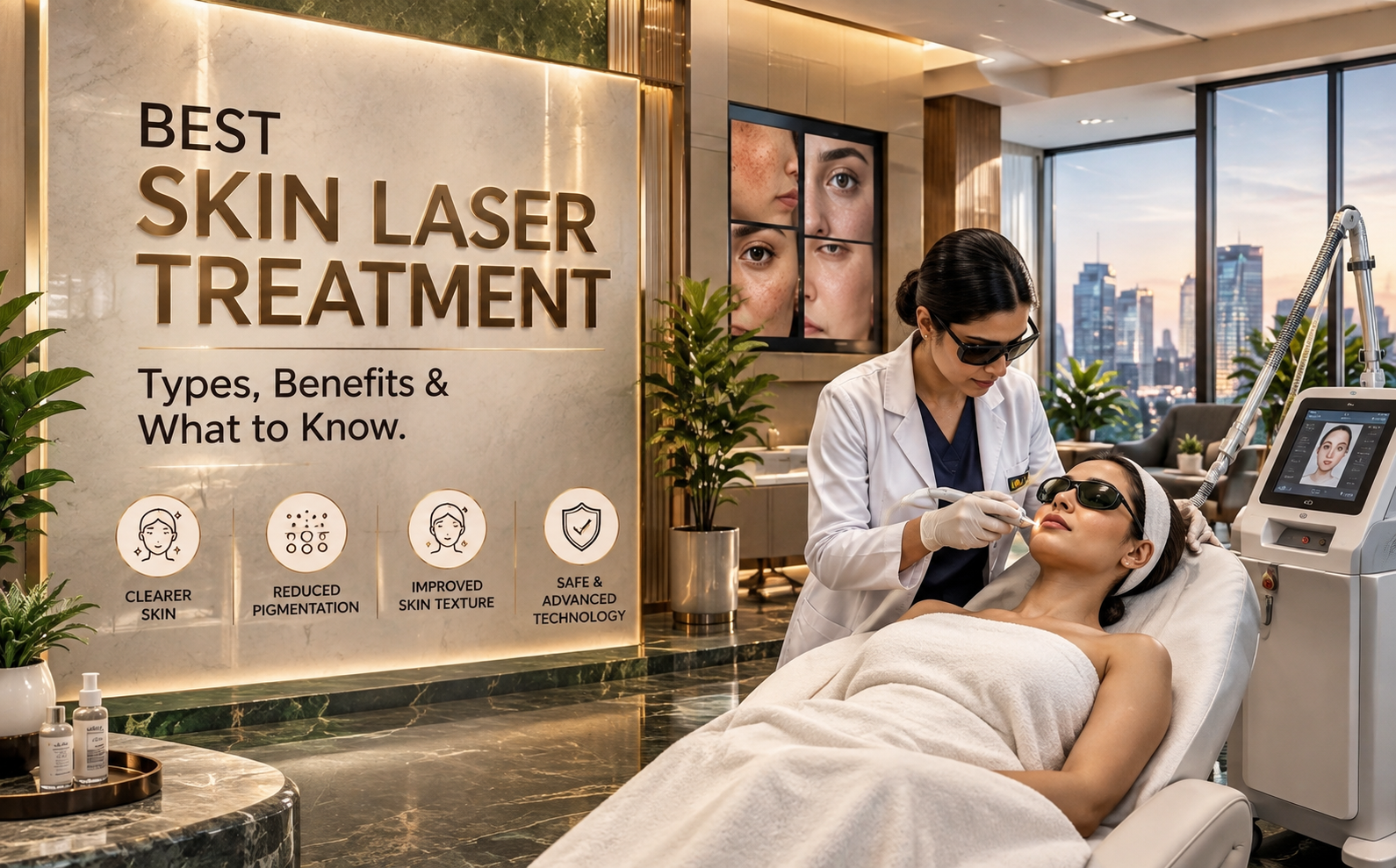
Laser technologies have become a standard consideration in modern dermatology for addressing a variety of skin conditions. Whether a patient is exploring options for acne scarring, hyperpigmentation, or general skin texture, understanding the fundamentals of skin laser treatment is an important first step. This guide explains how these technologies work, the different types available, and what to expect during and after a session.
What Is Skin Laser Treatment?
Skin laser treatment refers to the medical or cosmetic use of focused light energy to treat specific dermatological concerns. The term “laser” stands for Light Amplification by Stimulated Emission of Radiation. In dermatology, these devices emit precise wavelengths of light targeted at specific structures in the skin, such as pigment, blood vessels, or water within the skin cells. By carefully controlling this light energy, a professional can encourage the skin’s natural healing processes or break down unwanted pigment.
Lorem ipsum dolor sit amet, consectetur adipiscing elit. Ut elit tellus, luctus nec ullamcorper mattis, pulvinar dapibus leo.
What Skin Concerns May Be Treated With Lasers?
Laser therapy is not a universal solution, and its application depends highly on an individual’s unique skin type and medical history. However, dermatologists often utilize laser treatments to address several common concerns. These may include:
- Acne scars and general facial scarring
- Hyperpigmentation, uneven skin tone, and dark spots
- Fine lines and signs of photoaging
- Vascular lesions, such as visible capillaries
- Tattoos and unwanted hair
A thorough assessment is necessary to determine if a specific laser is appropriate for a particular concern.
Types of Skin Laser Treatment
It is important to understand that not all lasers perform the same function. Different technologies are engineered to target different skin issues.
- CO₂ Laser: The Carbon Dioxide (CO₂) laser is an ablative or fractional ablative laser. It works by removing the outer layers of the skin while heating the underlying dermis to stimulate collagen production. It is frequently considered for more pronounced concerns, such as deeper wrinkles or severe acne scars. Because of its intensity, patients may experience a longer recovery period.
- Pico Laser: Picosecond lasers deliver energy in ultra-short bursts (trillionths of a second). Rather than relying primarily on heat, the Pico laser uses acoustic waves to shatter pigment particles. It is commonly used for tattoo removal, hyperpigmentation, and acne scarring, often with less thermal damage to surrounding tissues.
- Carbon Laser: Often referred to as a “carbon peel,” this involves applying a layer of liquid carbon to the face, which penetrates the pores. A laser is then passed over the skin, destroying the carbon and taking dead skin cells, oil, and impurities with it. It is generally a milder procedure often considered for exfoliation and managing oily skin.
How Does Skin Laser Treatment Work?
The general principle behind most skin laser treatments is controlled injury and targeted absorption. When the laser light penetrates the skin, it is absorbed by specific targets called chromophores (such as melanin in brown spots or hemoglobin in blood vessels). This absorption creates heat, which either destroys the targeted cells or creates microscopic wounds. The body then responds to these controlled micro-injuries by producing new collagen and elastin, gradually resulting in smoother or more even-toned skin as it heals.
Lorem ipsum dolor sit amet, consectetur adipiscing elit. Ut elit tellus, luctus nec ullamcorper mattis, pulvinar dapibus leo.
What Happens During a Laser Treatment Session?
While protocols vary based on the specific device and the clinic, a standard session generally follows a predictable structure. The skin is thoroughly cleansed, and the patient is provided with protective eyewear. Depending on the laser’s intensity, a topical numbing cream may be applied beforehand to improve comfort.
During the procedure, the practitioner passes the laser handpiece over the target area. Patients might feel a sensation often described as a mild snapping of a rubber band against the skin, along with varying degrees of warmth. After the session, the area is typically cooled, and soothing ointments and strict sun protection are applied.
How Many Sessions Are Needed?
There is no single answer to how many sessions a patient will need. The appropriate number varies according to:
- The specific type of laser being used
- The severity and depth of the skin concern
- The individual’s cellular response to the treatment
- The established treatment goals
- The professional assessment of progress
Some mild concerns may require only one or two sessions, while deeper scarring or pigmentation often requires a series of treatments spaced several weeks apart.
What Should You Expect After Treatment?
Aftercare and recovery depend heavily on the procedure performed. Non-ablative or milder treatments (like certain Pico or Carbon lasers) may result in temporary redness or mild swelling that subsides within hours or a few days. More intensive ablative treatments (like a traditional CO₂ laser) require significant downtime, often involving crusting, peeling, and strict wound care for a week or more.
Regardless of the type of laser skin treatment, the skin will be highly sensitive to ultraviolet light. Strict sun avoidance and the diligent application of broad-spectrum sunscreen are crucial to prevent complications such as hyperpigmentation.
Lorem ipsum dolor sit amet, consectetur adipiscing elit. Ut elit tellus, luctus nec ullamcorper mattis, pulvinar dapibus leo.
Who May Need a Professional Assessment Before Treatment?
Every individual considering laser therapy should undergo a professional consultation. This is critical because certain medical conditions, active infections, a history of keloid scarring, or the use of specific medications (like isotretinoin) can increase risks. A qualified professional at a specialized clinic, such as Charm We Maintain, can evaluate skin type—including the Fitzpatrick scale, which is vital for preventing pigment-related complications—and medical history to determine the safest approach.
Questions to Ask Before Choosing Skin Laser Treatment
To make an informed decision, consider asking the following during a consultation:
- Which specific laser technology are you recommending for my skin concern, and why?
- What are the potential risks and temporary side effects associated with this device?
- What is the expected recovery time, and what specific aftercare will I need to follow?
- Am I a suitable candidate based on my skin tone and medical history?
- How many sessions are typically required to see clinical improvement for my specific concern?
Final Takeaway
Skin laser treatment encompasses a wide range of advanced dermatological technologies designed to address everything from fine lines to severe scarring. Because lasers differ significantly in their intensity, targets, and recovery requirements, there is no universally “perfect” laser. Safe and effective care relies on a thorough assessment, realistic expectations, and strict adherence to professional aftercare guidelines.
Contact Charm We Maintain today at +91 85919 10858 to book your consultation, or follow us on Instagram for expert skincare tips, treatment updates, and real results.
Frequently Asked Questions (FAQ)
- What is skin laser treatment?
It is a procedure that uses focused light energy to target specific skin concerns, such as pigmentation, scarring, or textural irregularities, by encouraging cellular turnover and collagen production. - What are the different types of skin laser treatment?
There are many types, broadly categorized into ablative (which remove the top layer of skin, like CO₂) and non-ablative (which heat underlying tissues without damaging the surface). Technologies include CO₂, Pico, Carbon, Nd:YAG, and Erbium lasers. - Is laser treatment suitable for every skin type?
No. Certain lasers are safer for lighter skin tones, while others (like specific Nd:YAG or Pico lasers) may be considered for darker skin tones. A professional assessment is required to prevent complications like post-inflammatory hyperpigmentation. - How long does a laser treatment session take?
Depending on the size of the treatment area and the type of laser used, a session can take anywhere from 15 minutes to over an hour, not including the time required for topical numbing. - What should I expect after treatment?
Reactions can range from mild, temporary redness resembling a sunburn to more intensive peeling, swelling, and crusting, depending on whether the treatment was mild or deeply ablative. - How many sessions might be needed?
The required number of sessions depends entirely on the condition being treated, the specific laser technology, and the individual’s skin response. It can range from a single session to a prolonged series. - Can I return to normal activities immediately?
This depends on the procedure. Mild treatments often allow for an immediate return to daily routines, while intensive resurfacing treatments require patients to stay home and practice strict wound care for several days.